How Match Context Shapes a Football Preview
Match context helps a football preview connect schedule, venue, team news, and stakes to observable decisions, so readers know what to watch without mistaking clues for forecasts.
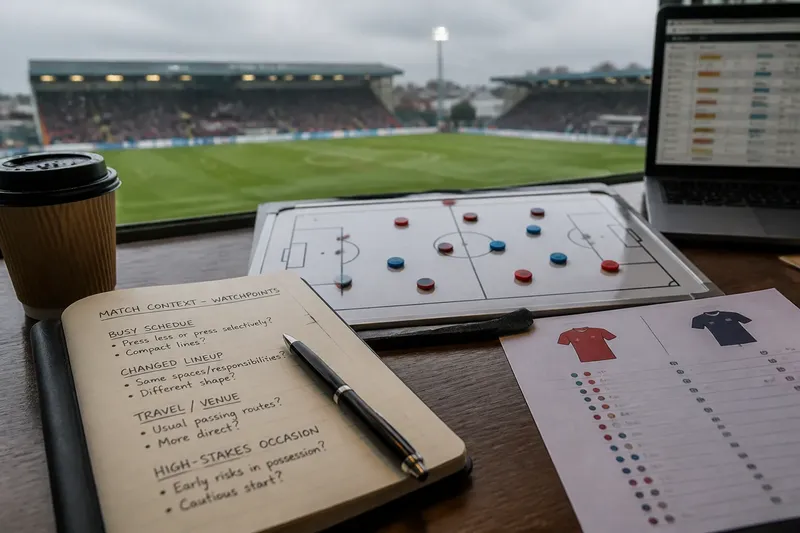
Match context in a football preview is useful when it points to a choice you can watch on the pitch. A short turnaround, a changed lineup, or a high-stakes occasion may shape a team’s approach, but none settles what will happen.
Keep the distinction clear: context offers a reason to ask a question, while the lineup and match behavior provide clues about the answer. That keeps a preview specific without turning a fixture list into a prophecy.
The schedule suggests questions about selection
Look at the fixtures around the match and ask what they might mean for team selection. A demanding recent game followed by another important appointment could make rotation plausible. It does not establish that a coach will rest anyone or that a change will decide the contest.
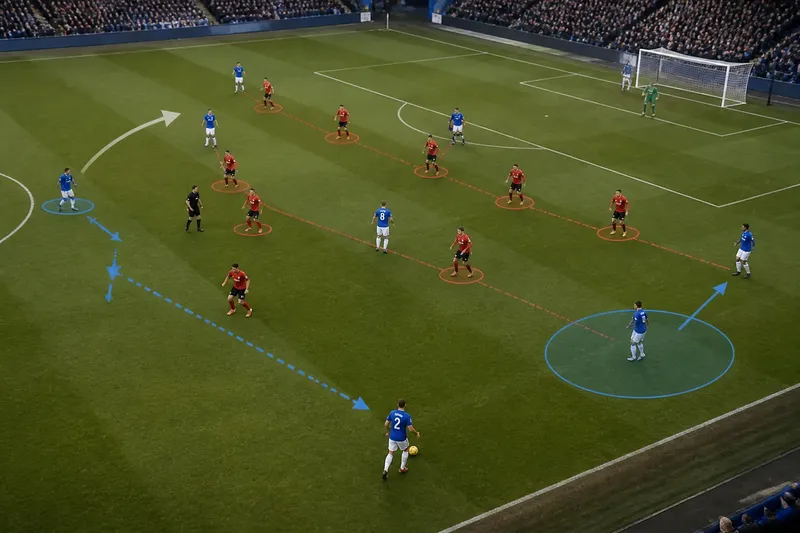
Make the possibility precise. If a midfielder has carried much of the pressing work, will the coach preserve that player or choose a less aggressive approach? Check the confirmed lineup, then watch whether the team presses, holds its shape, or changes who covers the central spaces.
Competition context can sharpen the question. A league match, a cup tie, and a two-legged contest present different circumstances, but the label alone does not reveal intent. Check the actual situation and describe the incentives without assigning either side a predetermined style.
It is not worth turning the fixture list into a fatigue calculator. Counting appearances without knowing about travel, player roles, recovery, and available replacements creates the appearance of precision without answering the useful question.
Travel and venue matter when they change the setting
Travel belongs in a preview when it connects to a practical question about preparation or selection. A journey after a midweek match might be relevant, but distance alone says little about how players feel or what the coach plans to do.
The venue offers observable details. Note the playing surface, the space available, and the crowd’s response to particular phases. Avoid claiming that a ground automatically favors a style; watch whether either team uses the space differently or adjusts its passing and pressing.
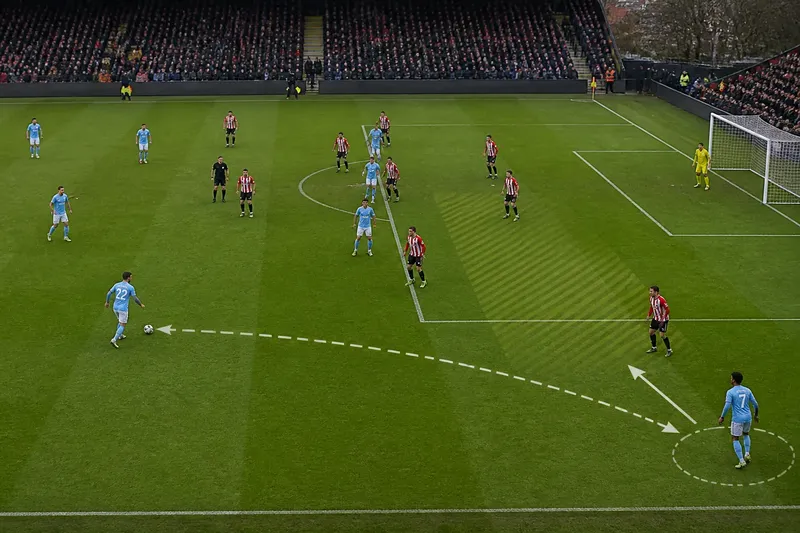
Say a visiting side has played away midweek, and its coach selects a different midfield pairing for the next match. The starting input is the changed pairing after that schedule; the action is to compare the new players’ positions and responsibilities with the team’s usual shape. If they sit deeper and the wide players advance, the observable result is a changed route into attack; if the shape remains familiar, the schedule may be background rather than an explanation.
Team news needs a role attached
An absence matters in a preview when you can explain the responsibility that may need covering. A missing center back might leave another player to organize the defensive line. An unavailable forward who links play could prompt a different route from midfield into attack. These are possibilities, not confirmed consequences.
A returning player may be used in a different position, given a limited role, or left out while a replacement stays in the lineup. Check official team news before publication, distinguish confirmed information from speculation, and watch the match to see which responsibility the selected players take on.
Recent coaching choices need the same care. A lineup change may reflect availability, the opponent, or workload. Treat the team sheet as a starting point for interpretation, not proof of a grand plan.
The occasion does not dictate the approach
A rivalry, cup elimination, title race, or first home game after a difficult spell can shape the occasion. It cannot establish in advance that the match will be tense, open, or emotionally charged.
Translate the stakes into things you can observe. Does a team press early or begin cautiously? Does it take risks after winning possession, or choose safer passes? Does the crowd respond to sustained pressure? “They will be nervous” is an interpretation presented as fact, and not a sturdy one.
Stakes and urgency are not the same as tactics. Both sides may have a strong reason to pursue a result while choosing different methods: one may seek control, while the other looks for quick transitions. Describe the competing incentives and leave room for either approach.
What should match context help you watch?
Does a short turnaround mean a team will rotate?
No. It makes changes a possibility, but the confirmed lineup is the evidence of who starts. Then watch whether a replacement takes on the same responsibility or prompts a change in the team’s shape.
Should a home crowd count as a tactical advantage?
Treat the crowd as part of the setting, not a settled advantage. Describe a visible response to a phase of play, then check whether either team changes its choices or tempo.
How can an absence be described responsibly?
Name the role that may need covering and separate confirmed absence from possible effect. If the replacement’s responsibilities are unclear before kickoff, keep the preview conditional and observe how the team distributes the work.
Can context support a match prediction?
It can inform an assessment, but it cannot settle one. Schedule, venue, and stakes sit alongside team selection and events during play, any of which may alter the picture.
Turn each detail into a watchpoint
A useful context note connects a circumstance to an observation and a decision. Use the result to keep or revise the initial reading, rather than treating the first explanation as settled.
- Busy schedule: Check whether the team presses less or chooses its pressing moments. If the line stays compact and pressure arrives selectively, retain workload as one possible explanation; if the team presses as usual, treat the schedule as background and consider the opponent’s buildup.
- Changed lineup: Check whether a replacement occupies the usual starter’s spaces. If the role is different, note a changed team shape; if it is similar, do not infer a tactical shift from the name change alone.
- Travel or venue: Check whether the away side uses its usual short passing routes. If it goes direct more often, note the change and consider pressure from the opponent as an alternative; if its patterns look familiar, leave travel as setting rather than cause.
- High-stakes occasion: Check whether either team takes early risks in possession. If one does, describe the observed choice without calling it inevitable; if both play cautiously, revise any expectation of an open start.
- Returning player: Check the player’s position and involvement. If the player takes on the expected role, note that the planned responsibility is present; if the player is used elsewhere or stays peripheral, describe the role actually seen.
- Possible pressing change: Check which players lead the press and who covers behind them. If the arrangement differs from the usual shape, note the change and consider the opponent’s setup; if it does not, do not attribute a tactical shift to the occasion alone.
Imagine a preview writer has two confirmed inputs: a team played away midweek, and its matchday lineup contains a new central midfield pairing. The writer checks the usual shape against the team sheet, then watches the opening passages to see where the new pair stand and who advances. If the pair stay deeper while the wide players move forward, the answer is that the route into attack has changed; if they occupy the familiar spaces, the lineup change has not visibly altered that pattern. In either case, the schedule may help frame a question, but it does not establish why the coach made the selection.
Keep context useful and proportionate
Include details that help explain a plausible team choice, a relevant constraint, or a specific point to watch. Leave out background that can only be tied to the match through a chain of guesses.
Revise the framing as play unfolds. If the lineup is unchanged and the approach looks familiar, a busy schedule may remain just a condition. If a changed role or substitution alters the team’s behavior, the context may help explain what to watch next.
Match context earns its place when it sharpens attention without pretending to see the future. For a football preview, connect schedule, venue, team news, and stakes to observable choices, then let the match answer the question.