The Far-Side Winger and the Space Behind the Full-Back
See how a far-side winger can pin a full-back, open the switch and create a route into the space behind the defense as play moves across.
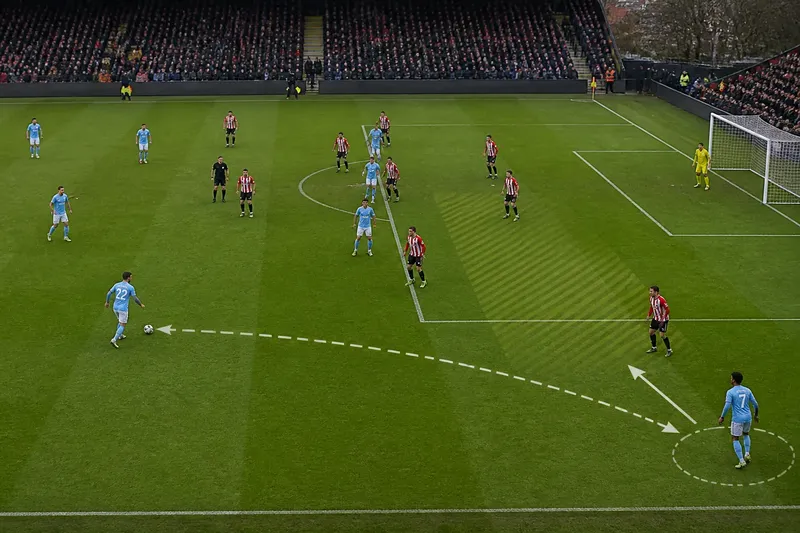
A far-side winger can open the space behind a full-back before the ball reaches him. The winger does it by staying wide enough to occupy that defender, then timing a move as possession switches across the pitch. The pass may travel toward the winger, but the tactical effect starts on the opposite side.
This is a small contest with a large consequence. If the defending full-back stays close to the winger, a channel can appear between him and the center-back. If he moves inward to protect that channel, the winger may receive outside him. The attacking side is asking the defender to choose which danger to accept.
The winger influences the defense from a distance
When the ball is on one flank, the far-side winger is often out of the immediate passing picture. That does not make him irrelevant. His position can keep the opposing full-back occupied, and the defender’s attention can shape the space available to teammates nearer the ball.
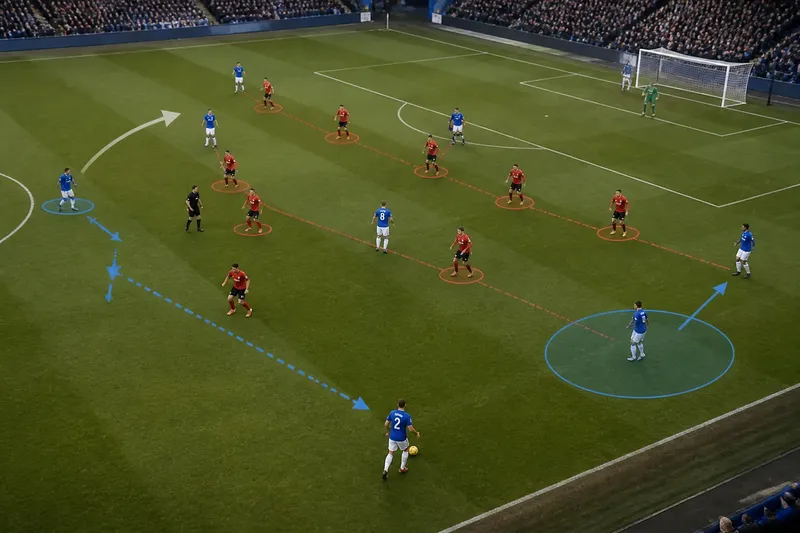
Consider a right-footed attack building down the left. The ball-side full-back and winger may draw the opponent’s midfield across. On the far side, the opposing right-back has to decide whether to stay near his own center-back or hold a position close to the left winger. If he narrows too early, the winger has room to receive wide after the switch. If he remains wide, the space inside him may become available for a runner.
The winger’s job is not simply to stand on the touchline. He needs to occupy a defender while remaining connected to the next phase. A position level with the last defender may threaten the space behind, but if the pass across takes time, the winger must stay onside and read whether the defense is stepping out or dropping back.
The passing lane appears as the ball moves
A switch of play is not just a long diagonal pass. It is a sequence: the attacking team draws pressure toward one side, moves the ball away from that pressure, and uses the moment before the defense resets. The far-side winger helps make that sequence valuable by giving the defense a reason not to compress freely.
As the ball travels across, the far-side full-back may be caught between two reference points. He can track the winger, narrow toward the center, or step toward the receiver. Each choice affects the lane behind him. A pass played early, before the defender has settled, can reach a runner moving into that lane. A slower switch gives the defense time to slide across and may leave the attacker facing a set block instead.
The best passing lane is often diagonal rather than straight down the line. A midfielder or full-back on the new ball side can pass between the opposing full-back and center-back, while a winger runs from outside to inside. That angle makes it harder for the full-back to see both the ball and the runner. The center-back then has to decide whether to leave his line and cover.
Timing decides whether the space can be used
The winger’s run should relate to the ball’s movement, not begin automatically when a teammate looks up. If the winger sprints behind the defense while the ball is still trapped on the opposite side, the pass may be impossible and the defense can recover. If he waits until the switch arrives at the far-side receiver, the full-back may already have closed the gap.
A useful cue is the first controlled touch by the player who receives the switch. If that touch points forward, the winger can accelerate into the channel as the receiver prepares to pass. If the receiver has to control backward or under pressure, the winger may need to hold his width and keep the defender stretched rather than make a run no one can serve.
Runs can also be staggered. The winger may stay wide while a striker or attacking midfielder first moves toward the channel. That movement can pull the center-back inward. The winger then attacks the space outside or behind the full-back, depending on how the defense responds. The aim is to make the defender turn and adjust, not to send every attacker into the same corridor.
The defender’s choices reveal the intended route
Watch the full-back’s hips and starting position as the ball changes sides. A defender facing inward can see the central buildup but may have to turn to track a run down the line. One positioned side-on may be better able to move in either direction. Neither posture solves the problem; each gives the attacker a clue about which route may be open.
The center-back’s response matters just as much. If he shifts toward the winger, the striker may find room between the center-backs. If he holds the middle, the winger may be able to run behind the full-back. The attacking team can exploit this with a third-player movement: the intended receiver draws one defender, while a teammate arrives into the space created by that response.
Defensive midfielders can interrupt the pattern by tracking the runner or closing the passing lane before the switch reaches the far side. That is why the ball-side buildup matters. A quick wall pass, a carry that draws a midfielder, or a change of angle can remove the defender who would otherwise cover the channel. The far-side winger creates a question; the other attackers have to make the answer difficult.
What should you look for as the play switches?
Does the winger stay wide before the switch?
Width can keep the opposing full-back from joining the central defensive line. If the winger drifts inward too soon, the defender may narrow without conceding an immediate outside pass, and the channel can become crowded.
Who moves into the channel first?
Note whether the winger, striker, or attacking midfielder makes the first run behind the full-back. That order indicates whether the team is trying to attack the outside lane directly or pull a center-back away for a second runner.
Does the receiver have a forward-facing touch?
A forward-facing touch can let the receiver play into the run before the defense slides across. A backward touch often slows the attack, so the winger may be more useful holding the defender wide than forcing a run.
What does the center-back protect?
If the center-back steps toward the channel, watch for space opening centrally. If he stays near the striker, the winger may have a clearer route behind the full-back, provided the pass arrives before the defense resets.
A short sequence shows how the contest can work
Say a team has possession near the left touchline, with the opposing midfield shifting toward the ball. Its left-sided midfielder passes inside, and a central player switches toward the right. The far-side winger has stayed wide, keeping the opposing right-back from joining the crowded center. As the right-sided receiver takes a forward touch, the winger runs diagonally behind the full-back. The receiver can now play into that channel, or the center-back’s movement to cover can leave the striker free to receive inside.
The sequence depends on several decisions aligning, not on a fixed pattern producing the same result every time. If the full-back retreats early, the winger can check toward the ball and offer a pass to feet. If the center-back covers the run, a pass inside may be better. The value lies in forcing the defense to reveal its priorities while the ball is moving quickly enough to exploit them.
When the space behind the full-back is not there
A far-side winger cannot create depth from a position that leaves no plausible pass. If the defensive line is already close to its own goal, there may be little room behind it. The better option may be a pass to the winger’s feet, followed by a combination with an overlapping full-back or an inside runner.
Likewise, a switch that travels slowly across a settled defense may not produce a useful gap. The attacking side can retain possession and move the defense again rather than force a difficult ball. A clipped pass behind the full-back is also unhelpful if the runner is isolated and the receiver has no support for the next action.
It is not worth treating every switch as a cue for a sprint. Repeated runs into a covered lane can leave the winger tired and remove a passing option from the attack. Holding width, checking toward the ball, or delaying the run may preserve the threat better.
The far-side winger changes the defender’s next decision
The far-side winger and the space behind the full-back are linked by attention, timing, and the defenders’ cover. The winger’s position can pin the full-back; the switch can make that defender move; and a well-timed run can test the gap before the back line adjusts. The pass itself is only one part of the contest.
When watching a match, follow the winger before the ball reaches his side. Ask whether his width holds the full-back out, whether a teammate draws the center-back, and whether the receiver can play forward quickly. Those details explain why a seemingly quiet player can shape the most dangerous moment of a switch.